
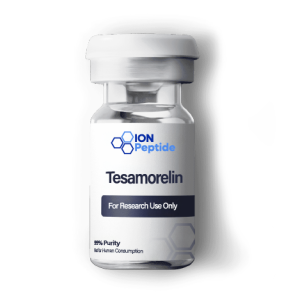
Introduction to tesamorelin
Tesamorelin is a synthetic peptide that has gained significant attention in the field of endocrinology for its ability to stimulate growth hormone (GH) secretion. Originally developed to address HIV-associated lipodystrophy, tesamorelin functions as a growth hormone-releasing hormone (GHRH) analog, promoting the natural release of GH from the pituitary gland. Research on tesamorelin has expanded to explore its broader effects on metabolism, body composition, and hormonal regulation, making it a promising tool in peptide science.
Mechanism of Action of tesamorelin
The primary mechanism of tesamorelin involves mimicking endogenous GHRH. By binding to GHRH receptors in the pituitary gland, tesamorelin triggers a cascade of intracellular signaling that results in increased GH secretion. Elevated GH levels subsequently influence insulin-like growth factor 1 (IGF-1), which mediates many of the anabolic and lipolytic effects associated with tesamorelin. Studies indicate that the controlled stimulation of GH via tesamorelin reduces visceral adipose tissue while maintaining muscle mass, highlighting its metabolic specificity.
tesamorelin and Growth Hormone Secretion
Clinical research demonstrates that tesamorelin administration effectively enhances pulsatile GH secretion without causing excessive or unregulated hormone release. This targeted approach differentiates tesamorelin from direct GH therapy, which can carry higher risks of side effects. Multiple studies show that tesamorelin improves GH axis function, restoring hormonal balance in individuals with deficient GH signaling. The peptide’s ability to modulate GH secretion in a physiologic manner underscores its value in therapeutic research.
Effects of tesamorelin on Body Composition
Tesamorelin has been extensively studied for its effects on body composition. In controlled trials, individuals receiving tesamorelin exhibited significant reductions in visceral fat, alongside improvements in lean body mass. These metabolic effects are closely linked to enhanced GH signaling, which promotes lipolysis and protein synthesis. Furthermore, tesamorelin’s influence on body composition has potential implications beyond HIV-associated lipodystrophy, offering insights into metabolic disorders characterized by visceral adiposity.
tesamorelin and Metabolic Regulation
Beyond body composition, tesamorelin plays a role in metabolic regulation. By increasing GH levels, tesamorelin improves lipid metabolism, glucose homeostasis, and energy expenditure. Research highlights that tesamorelin administration can lead to reduced triglyceride levels and improved insulin sensitivity, although careful monitoring is necessary. The peptide’s targeted metabolic effects suggest potential applications in conditions involving dysregulated lipid profiles and metabolic syndrome.
Safety and Clinical Research Insights
Safety profiles of tesamorelin indicate it is generally well-tolerated. Adverse events are typically mild, including injection-site reactions and transient edema. Long-term studies of tesamorelin emphasize the importance of monitoring IGF-1 levels to avoid excessive GH activity. Ongoing research continues to evaluate the peptide’s efficacy, with studies investigating dosing strategies, duration of therapy, and broader metabolic benefits.
tesamorelin in Scientific Research
Scientific interest in tesamorelin extends beyond clinical therapy. Research on tesamorelin provides valuable insights into endocrine signaling, GH pathway modulation, and peptide-based interventions. Studies using tesamorelin have advanced understanding of hormone regulation, adipose tissue dynamics, and metabolic processes, positioning the peptide as a critical research tool in both basic and translational science.
Conclusion
Tesamorelin represents a significant advancement in peptide science, offering targeted stimulation of growth hormone pathways with meaningful effects on body composition and metabolism. Clinical and research findings consistently demonstrate that tesamorelin improves GH secretion, reduces visceral fat, and modulates lipid metabolism, all while maintaining a favorable safety profile. As research continues, tesamorelin’s role in metabolic regulation and endocrine therapy is expected to expand, providing deeper insights into growth hormone pathways and potential therapeutic applications.