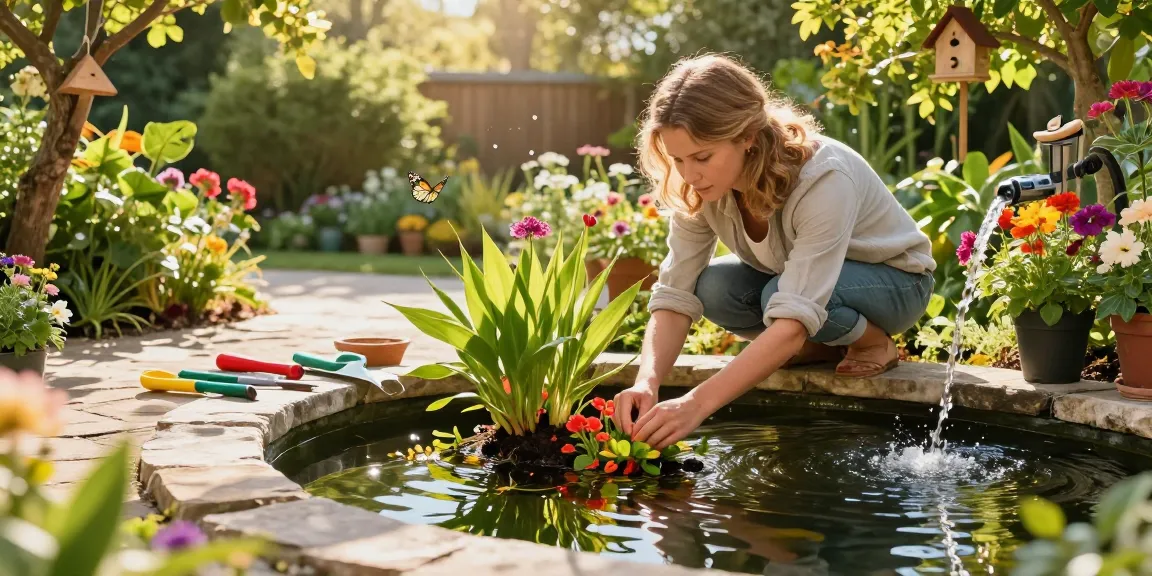
When Jenna in Austin noticed her backyard vegetable beds were either bone-dry or waterlogged after her old pop-up sprinklers ran, she started logging run times and soil moisture for two weeks. Her struggle wasn’t whether to water more or less — it was choosing the right delivery method for each zone. That’s the kind of real-world decision U.S. homeowners face: an assortment of lawns, flower borders, potted containers and veggie plots that all need different kinds of water, not one universal spray-and-pray routine.
Match the problem to the system: why fit matters more than brand
Problem: Your lawn is large, uneven, and gets thirsty patches in the afternoon sun. Solution: a zone-based sprinkler system with weather-aware scheduling. For a 7,000–10,000 sq ft suburban lawn, fixed spray heads leave dry rings under trees and ponding near low spots. Instead, install separate irrigation zones (front yard, back shady lawn, sunny slope) and use adjustable rotary heads on sunny expanses. A WiFi timer from RainPoint can handle that schedule automatically, staggering runtimes so pressure stays steady across zones.
Problem: Narrow beds, established perennials, or neighboring sidewalks that cause overspray. Solution: drip irrigation or soaker lines that deliver water at the root zone. Drip tubing and micro-sprays reduce runoff along paved edges and let you run longer cycles for deeper infiltration without wasting water on sidewalks.
Problem: A compact urban yard with containers and hanging baskets. Solution: self-watering and low-flow drip outlets tailored to pots. These give a slow, steady flow so potting mix wets evenly — crucial since pots dry much faster than ground soil.
Concrete example
On a 5-zone property: zone 1 rotary sprays for the lawn (10 minutes early morning), zone 2 micro-sprays for delicate beds (8 minutes), zone 3 drip for vegetable rows (40 minutes, split into two 20-minute cycles), zone 4 soaker hose for a shrub border (45 minutes), and zone 5 self-watering stations for pots (continuous low flow). This kind of mixed approach reduces overwatering and targets supply where it matters.
Drip irrigation: when precision beats power
Problem: You’re growing tomatoes, peppers, herbs or perennial borders that rot or develop fungal disease when foliage is wet. Solution: drip irrigation. Drip systems deliver water directly to the root zone at low pressure, minimizing evaporation and wet foliage — two big drivers of disease in vegetable gardens and flower beds.
Drip is especially effective where plant spacing varies. Emitters can be set by plant (1–4 gph each) and moved as plants grow. A common homeowner setup is 1 gph emitters for small herbs and 2 gph for larger vegetables, with line pressure regulated to 15–20 psi for consistent flow. Because drip runs longer but slower, the effective water penetration is deeper — reducing frequency of watering by as much as 30–50% compared with overhead spray in many cases.
Less-obvious tips for a successful drip zone
- Install a pressure regulator and filter at the zone inlet; sediment clogs emitters fast in older municipal systems.
- Use dual-run schedules: a short cycle for surface wetting to eliminate dry crusts and a longer cycle later to drive water deeper.
- Label lines and color-code emitters for easy seasonal adjustments (e.g., blue for 1 gph, green for 2 gph).
Example figure: According to the EPA WaterSense program, replacing conventional irrigation with efficient systems and proper scheduling can save significant water — smart controllers alone can reduce outdoor water use substantially when paired with drip and properly tuned sprinkler zones (see EPA WaterSense for guidance). For urban gardeners, switching to drip often cuts garden water use by 30–60% compared with overhead watering (EPA WaterSense).
Sprinklers: when coverage and convenience matter
Problem: You need even, fast coverage for a mid-to-large sized turf area used for kids and pets. Solution: a well-designed sprinkler system with matched precipitation rates and flow-balanced zones. Sprinklers are still the most efficient choice for broad, level lawns because they cover turf uniformly when heads are spaced and selected correctly.
For efficient sprinkler zones, pick heads with matched precipitation and rotate between adjacent heads using the same nozzle pattern. If runoff occurs on slopes or compacted soils, use shorter, repeated cycles (cycle-and-soak): run 5–10 minutes, wait 20–30 minutes to let water infiltrate, then repeat. This reduces puddles and wasted water down drains.
Sprinkler optimization checklist
- Audit head coverage: walk the lawn during a run and mark dry spots for adjustment.
- Replace old rotors with low-angle, matched-precipitation heads on windy sites to avoid drift.
- Install a weather-smart controller that skips cycles on rainy days and adjusts for evapotranspiration.
Scenario: A city homeowner trimmed runtime after installing a rotary nozzle and a weather-based timer — summer water use dropped by roughly 20% while playability improved. Smart scheduling and matched heads are why many homeowners get measurable water and cost savings from sprinkler upgrades.
Combining systems: the hybrid approach that often wins
Problem: A property with lawn, vegetable garden and mixed flower beds — treating the whole property with one system wastes water. Solution: a hybrid irrigation layout that pairs sprinklers for turf, drip for beds, soaker hoses for dense shrubs and self-watering stations for pots. This is the scenario-based approach RainPoint recommends when matching hardware to needs rather than forcing a single solution.
Example layout and weekly schedule (simple table):
ZoneSystemTypical Run PatternFront lawnRotary sprinklers3x/week, early morning, 8–12 minutes per cycle (cycle-and-soak)Back vegetable bedsDrip lines3x/week, late evening, 30–45 minutes (split)Shrub bordersSoaker hoses2x/week, early morning, 45 minutesPatio potsSelf-watering drippersDaily short bursts or continuous low flow via timer
Practical tip: Use a smart WiFi timer in a hybrid setup to schedule different runtimes for each type of system, so you’re not babysitting valves. If you want a prescriptive upgrade tailored to your yard, click here to upgrade to a water-saving lawn with RainPoint and see recommended layouts and components matched to common U.S. yard types.
Installation pitfalls and long-term care that pros forget
Problem: After installation, systems underperform because of seasonal neglect and simple oversights. Solution: maintenance routines and small upgrades that keep efficiency high year-round. Even the best layout fails if emitters clog, heads shift, or controllers are left on a static schedule.
Maintenance checklist with real examples:
- Flush and winterize drip lines — in colder climates, unprotected drip can freeze and split. Homeowners in northern states should blow out outdoor lines each fall or remove timers’ batteries to protect electronics.
- Quarterly head checks — lawn mower strikes or kids can knock heads off alignment. Realign and replace low-flow nozzles when coverage drops below 90% of the target area.
- Seasonal scheduling — turf needs less water in early spring and late fall; vegetable beds need steady but reduced amounts during heat waves when run times should increase moderately to maintain root-zone moisture.
Specific figure: University extension studies often show that simple calibration and seasonal scheduling can cut irrigation water use by 25% or more compared with default, year-round timers. A modest investment in a pressure regulator, filter and smart controller pays back in saved water and healthier plants.
Finally, every homeowner’s yard is a patchwork of needs. Use the right system for each problem: small lawns often do fine with mobile sprinklers or a simple timer; large lawns benefit from zone-based sprinkler systems; vegetable gardens thrive on precise drip; flower beds prefer gentle root-zone watering; and pots want slow, steady self-watering. Matching the solution to the problem — and keeping the system tuned — is what saves water and money in the long run, and helps you get the most from your irrigation investment.